
„I thought I just had to try harder”
It’s one of the sentences I hear most often during a first visit. Aleksandra, massage therapist at UfMed
One client lost 8 kilograms and her legs look exactly the same. Another has no trouble putting on her shoes in the morning, but by evening they feel tight. Another says she can no longer see the outline of her knees, even though she exercises, watches her diet and has tried everything that promised smoother skin. All of them assumed the problem was fat. None of them thought about swelling and how their lymphatic system works.
Treatment: full body lymphatic drainage
Price: from 210 to 360 PLN
Location: Warsaw, Powiśle (Dobra St.)
Table of contents
- Can’t see your knees? First check what is really changing their outline
- What is lymphatic stasis?
- Water cellulite: what is really behind the name?
- Lipedema: a condition diagnosed by a doctor
- Pressotherapy is trendy. The problem starts when a device replaces proper assessment
- Why a single drainage session doesn’t solve the cause of swelling
- Is lymphatic drainage safe during pregnancy?
- Drainage after surgery and during recovery
- What you can do tonight
- When to see a doctor instead of booking a massage
- What matters most isn’t how your knees look
- Frequently asked questions about lymphatic drainage
Can’t see your knees? First check what is really changing their outline
Fluid retention can change the way your legs look faster than your body weight changes. Swelling can appear around the ankles, above the knees, on the calves and thighs. It often gets worse at the end of the day, after long periods of sitting, travel, in hot weather or before your period.
These are the signs we most often look for:
- your shoes or trousers feel tighter in the evening than in the morning,
- your socks leave deep marks on your calves,
- the outline of your ankles or knees becomes less defined,
- your legs feel heavy, tense and noticeably more swollen at the end of the day,
- a dent stays in the skin for a moment after you press it.
Not every one of these signs means a lymphatic disorder. It is, however, a good reason to stop judging your body by weight alone and take a closer look at swelling. We cover the causes of leg swelling and warning signs in a separate guide.
What is lymphatic stasis?
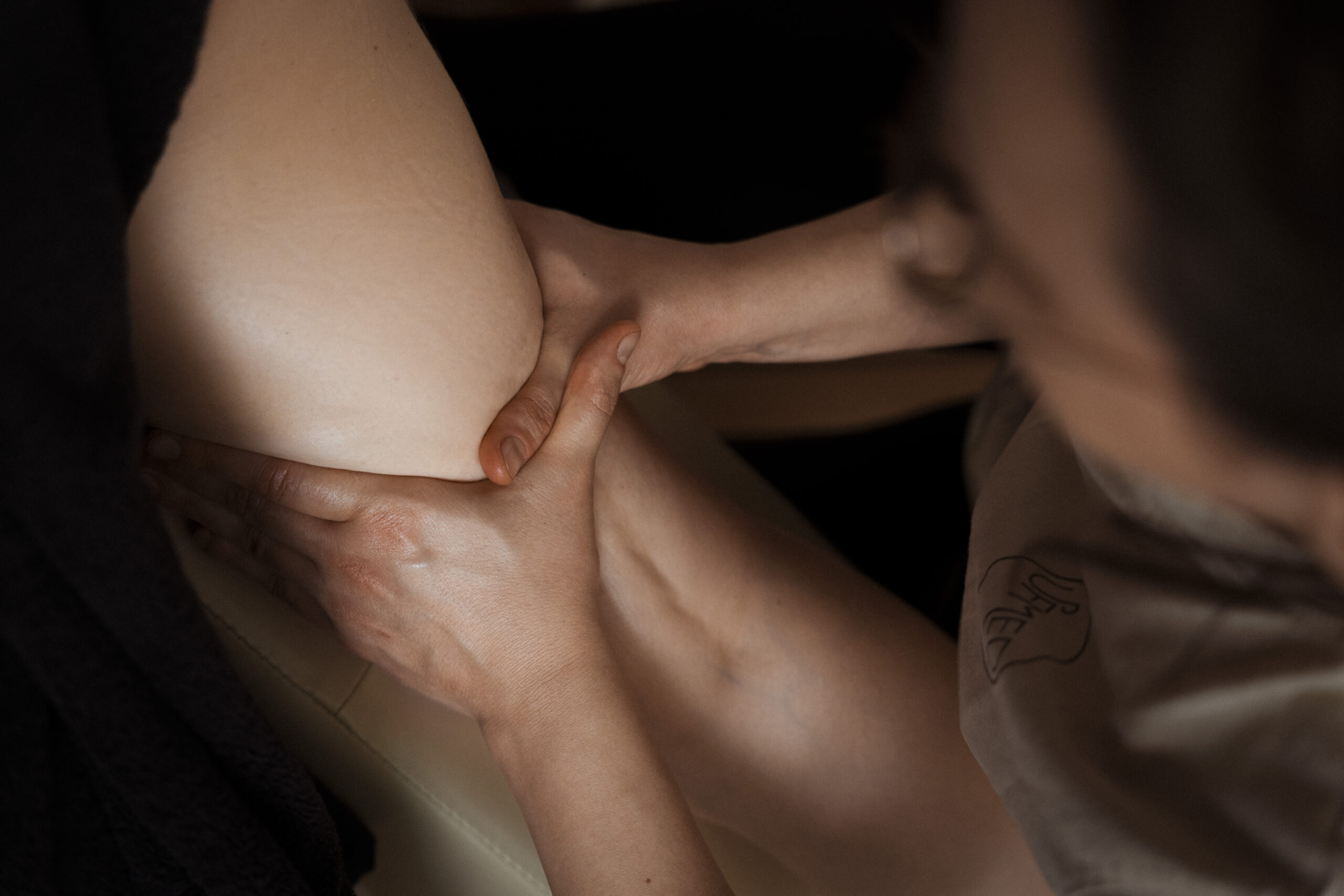
The lymphatic system collects excess fluid, proteins and other substances from the tissues and returns them to the bloodstream. It has no single pump that works like the heart. The flow is supported by, among other things, muscle movement, breathing, the work of the diaphragm and contractions of the lymphatic vessels.
When you sit for many hours, move very little or are immobilised for a while, your tissues may clear excess fluid more slowly. Your legs then feel heavier, your skin tighter, and your clothes start to feel tight by the end of the day. If you want to go back to the basics, read what lymphatic drainage is, how it works and who should have it.
Water cellulite: what is really behind the name?
„Water cellulite” is a popular term, not a precise medical diagnosis. In practice, the name covers two different things:
Cellulite
Has a structural basis. It results, among other things, from the structure of fat tissue and connective tissue.
Swelling
Means excess fluid in the tissues. It can change during the day and get worse in the evening.
The two can occur together. When tissue is swollen, unevenness tends to be more visible and the skin feels firmer and less elastic. After drainage your legs may look lighter and the skin surface smoother. This doesn’t mean the massage removed fat or permanently got rid of cellulite. What went down was the swelling that made the unevenness stand out.
This distinction matters because lymphatic drainage does not make you lose weight. It can affect how light your legs feel, tissue tension and the circumference caused by accumulated fluid, but it does not replace obesity treatment or fat reduction.
If you’re not sure whether the problem is fluid or tissue tension, also read how to tell swelling from stiffness.
Lipedema: a condition diagnosed by a doctor
You may come across different spellings, such as lipedema or lipoedema. It is a chronic disorder of fat tissue that occurs almost exclusively in women. The changes are usually symmetrical and affect the legs, sometimes also the arms, while the feet and hands are spared.
Typical features may include:
- tenderness when pressed,
- a tendency to bruise easily,
- a feeling of heaviness,
- a clear line of tissue above the ankle, known as the cuff sign.
Diet and exercise can improve your overall health, but they usually don’t fully change the characteristic body proportions.
Lipedema is not diagnosed in a massage studio. The diagnosis should be made by a doctor, for example an angiologist, vascular surgeon or phlebologist. Drainage and other elements of conservative therapy can support comfort, but they do not replace a medical diagnosis.
Pressotherapy is trendy. The problem starts when a device replaces proper assessment
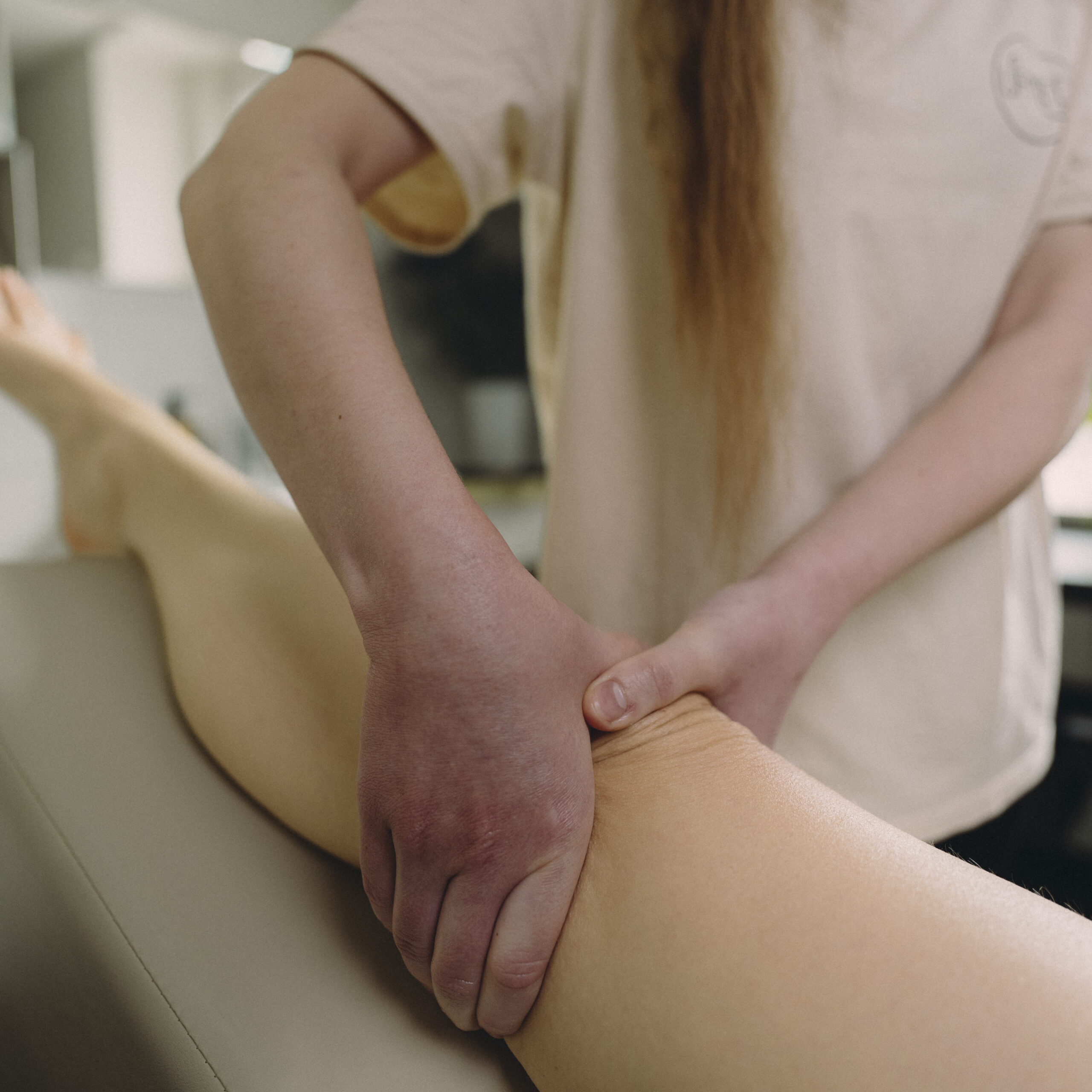
Pressotherapy, or intermittent pneumatic compression, has its place in treating swelling and in preventing complications of immobilisation. It is not, however, a one-size-fits-all treatment for everyone with heavy legs.
Does pressotherapy cause varicose veins?
There is no basis for saying that properly selected pressotherapy causes varicose veins on its own. The risk lies elsewhere: when the treatment is done without a health interview, without assessing the condition of the veins, with undiagnosed thrombosis, or with pressure that isn’t adjusted to the person.
Visible veins, calf pain, clearly uneven swelling, a history of thrombosis, heart disease and other vascular problems require a medical assessment first. The fact that a device is available in a salon or at home doesn’t mean it’s safe to use in every situation.
Why individual pressure settings matter
The body isn’t always symmetrical. One leg may be recovering from an injury or surgery, be more swollen or carry weight differently. Setting an identical programme for both legs ignores these differences. That’s why the intensity, duration and type of compression should follow from an individual assessment, not from a ready-made programme labelled „cellulite” or „light legs”.
The pressure should not cause pain, numbness or growing discomfort. If it does, the treatment must be stopped and the cause explained.
Pressotherapy or manual drainage?
Pressotherapy
The device runs a pre-programmed cycle. It can complement treatment, but it shouldn’t replace assessment and an individual plan.
Manual drainage
The therapist’s hands continuously assess how the tissues respond, differences between the two sides and areas that need a gentler approach.
This doesn’t mean one method is always good and the other always bad. What counts is whether the method was chosen for the specific person.
Why a single drainage session doesn’t solve the cause of swelling
After the first session your legs often feel lighter and your clothes fit differently. But if the conditions that encourage fluid build-up stay the same, the swelling may come back. A single session won’t change the number of hours you spend without moving, the way you breathe or the effects of a past surgery.
That’s why the work is sometimes planned as a series. There is no single right number of sessions for everyone. The frequency depends on the cause of the swelling, how your body responds, your health and your doctor’s advice. For one person the goal will be short-term relief after travel, for another it will be part of longer-term swelling management.
At the first visit it’s worth setting a goal, assessing how the tissues respond and saying honestly whether massage makes sense in that situation.
Is lymphatic drainage safe during pregnancy?
Drainage can be done for some pregnant women, especially when heavy, swollen legs are a problem. However, the technique, position and scope of work must be adapted to the stage of pregnancy and the woman’s health. The decision is best made after consulting the doctor in charge of the pregnancy, particularly in a high-risk pregnancy or when other conditions are present.
In pregnancy, these symptoms are not a reason for a massage but a signal to contact a doctor urgently:
- sudden swelling of the face or hands,
- a severe headache,
- vision problems,
- shortness of breath,
- high blood pressure,
- painful swelling in one leg.
Drainage after surgery and during recovery
After surgery we usually move less and the body reacts with swelling. Drainage is sometimes considered after certain orthopaedic, oncological, abdominal or cosmetic procedures, but when it can start and how much is done depends on the type of surgery, how healing is going, the condition of the wound, the risk of blood clots and the surgeon’s recommendations.
We don’t start working because a set number of days has passed since the operation. We start when the doctor in charge of treatment gives their consent and there are no contraindications. The same goes for the series: its length can’t be honestly set without knowing about the procedure and how the body responds.
In an upcoming article we’ll describe in more detail after which surgeries and conditions different types of massage are considered, when a doctor’s consent is needed and when the treatment should be postponed.
What you can do tonight
If the swelling is mild, affects both legs and you know what caused it, start with simple things:
- change position and walk around for a few minutes,
- move your feet slowly and let your calf muscles work,
- rest with your legs slightly raised,
- breathe calmly, engaging your diaphragm,
- don’t rub hard over varicose veins or a calf that hurts in one spot.
Home remedies can ease the feeling of heaviness, but they shouldn’t delay diagnosis of recurring or unusual swelling. See also which everyday habits help maintain the effects of massage and which quickly undo them.
When to see a doctor instead of booking a massage
Don’t wait to see a doctor if:
- one leg has suddenly become more swollen, warm, red or painful,
- the swelling appeared after a long journey, surgery or a period of immobilisation and is clearly different on each side,
- the swelling comes with shortness of breath, chest pain or heart palpitations,
- you have a fever, increasing pain or signs of infection,
- the swelling appeared for no obvious reason or is getting worse quickly.
In these situations massage could delay the help you actually need. Diagnosis comes first.
What matters most isn’t how your knees look
What matters most is why their outline has changed. Sometimes it’s simple overload and many hours without movement. Sometimes it’s swelling related to pregnancy or recovery. And sometimes you need to be checked for lipedema, venous insufficiency or another condition.
„I thought I just had to try harder” sounds completely different once it turns out the problem has nothing to do with willpower. Finding the real cause matters more than another cream, a stronger massage or the next programme on a device.
If you want to find out whether drainage makes sense in your case, book a consultation and see full body lymphatic drainage at UfMed.
About the author
Aleksandra
Aleksandra is a massage therapist at UfMed. In her work she helps match each treatment to what the body currently needs and makes sure the tissues are handled safely and attentively.
Meet Aleksandra and book a consultation at UfMed.
UfMed, Dobra 8/10, unit 37, Warsaw, Powiśle
Frequently asked questions about lymphatic drainage
Does lymphatic drainage help you lose weight?
No. It can reduce circumference caused by swelling, but it doesn’t remove fat tissue.
Does drainage remove toxins?
That’s a marketing term. The lymphatic system transports tissue fluid, proteins and immune cells. The processing and removal of many metabolic by-products is mainly handled by the liver and kidneys.
Should drainage hurt?
It can. Manual lymphatic drainage uses rhythmic, sweeping, pushing movements performed with moderate, carefully adjusted pressure. Pain during the massage may occur in areas where more lymph has accumulated.
How many sessions do I need?
It depends on the goal, the cause of the swelling and how your body responds. The plan is set after a health interview and the first visit. When swelling is related to a medical condition, drainage should be part of a wider medical treatment plan.
Can drainage be combined with pressotherapy?
In some situations, yes, as long as there are no contraindications and the settings are adjusted individually. Pressotherapy doesn’t replace a diagnosis or a manual assessment of the tissues.
Sources and further reading:
- Poznan University of Medical Sciences: Not just swelling. What is lipedema? (in Polish)
- NHS: swelling in pregnancy and symptoms that need medical advice
- ACOG: preeclampsia and warning signs
- PubMed: lymphatic drainage and leg swelling in pregnancy
- PubMed: managing swelling after orthopaedic surgery and injuries
- PubMed: lymphatic drainage after total knee replacement
This article is for information only and does not replace medical advice. UfMed does not make medical diagnoses. If you have swelling of unknown cause, a sudden worsening of symptoms or suspect a medical condition, contact a doctor.