
The braces are off. Your teeth are straight. And yet you still wake up with tight cheeks, aching temples and the feeling that you’ve been biting down all night. This is when many people hear: „your bite has been corrected, so everything should be fine”. But braces move teeth. They don’t break the clenching habit, they don’t regulate the tension in your chewing muscles and they don’t automatically change how your body reacts to stress. That’s why you can finish orthodontic treatment with a beautiful smile and still have a problem with your jaw.
Treatment: jaw and face mobilisation massage
Location: Warsaw, Powiśle (Dobra St.)
Date: October 2026
Table of contents
- Upper jaw or lower jaw? Let’s get the words right first
- Symptoms you often don’t link to your jaw muscles
- Where does tension in the chewing muscles come from?
- Do braces cause jaw pain?
- Muscle therapy first or braces first?
- Why you can’t „massage it all out” in one visit
- How long does jaw tension therapy take?
- Massage brings relief. Exercises help you keep it
- A splint, braces and massage don’t do the same thing
- When massage isn’t the first step
- You don’t need a stronger massage. You need the right plan
- Frequently asked questions
Upper jaw or lower jaw? Let’s get the words right first
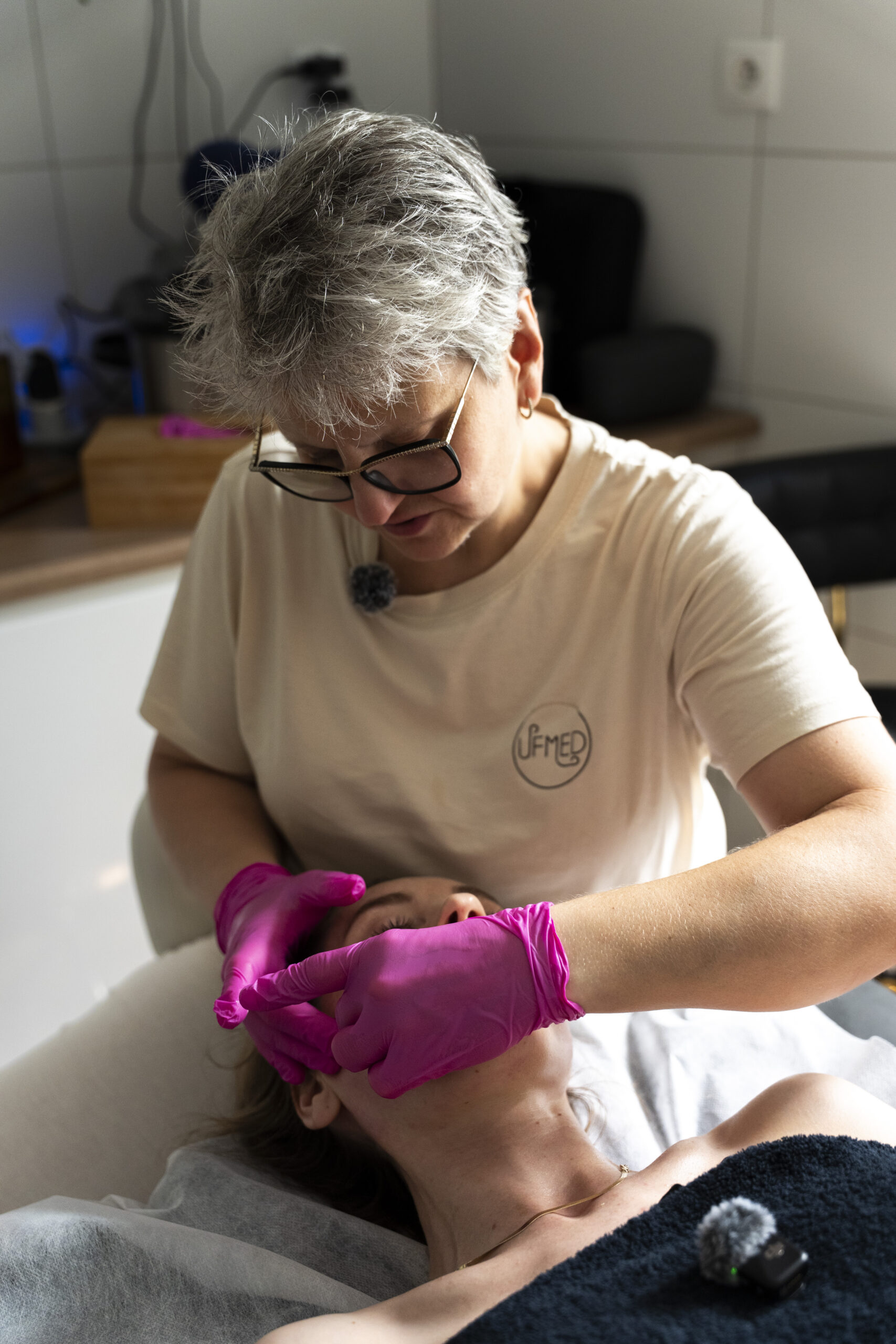
We usually just say „my jaw hurts”, but the part that actually moves is the lower jaw, or mandible. It connects to the skull through two temporomandibular joints, one on each side. Its movement is controlled by the chewing muscles, mainly the masseter, the temporalis and the pterygoid muscles.
Temporomandibular disorders, known as TMD, are not a single condition but a group of more than 30 problems affecting the joints, the chewing muscles and related headaches.
According to the US National Institute of Dental and Craniofacial Research (NIDCR), symptomatic TMD affects about 5% of adults, and it occurs about 2 times more often in women than in men.
So the biggest problem isn’t that the masseter is some mysterious muscle. It’s that when it’s overloaded, it can mimic several other problems at once.
Symptoms you often don’t link to your jaw muscles
- pain or pressure in the temples, especially in the morning,
- tight, tired cheeks when you wake up,
- pain in the face, neck or around the ear,
- limited or uneven mouth opening,
- painful clicking, jumping or locking of the jaw,
- worn teeth, cracked fillings or marks from biting your cheeks,
- the feeling that your teeth suddenly meet differently.
Painless clicking on its own doesn’t always mean a disorder and often doesn’t need treatment. It’s different when there’s pain, restricted movement, locking or a change in your bite. Then you need an assessment by a dentist or doctor, because pain in the face and jaw can have many different causes.
Where does tension in the chewing muscles come from?
Usually there isn’t one single culprit. Tension builds up from several things: clenching during the day at work and under stress, night-time bruxism (teeth grinding), chewing gum, nail biting, chewing on one side, toothache, a long dental procedure, an injury, or a protective habit that stayed in the body after the original pain went away.
Daytime clenching
You can notice it and gradually change it.
Night-time bruxism
Happens outside your awareness and needs a dental assessment.
Massage can reduce muscle tension and the discomfort that comes with it, but it doesn’t treat every cause of bruxism.
The neck and jaw also often become overloaded at the same time. That doesn’t mean every postural issue causes TMD, or that simply „straightening your back” will solve the problem. Therapy should be based on an examination, not on a one-size-fits-all scheme from the internet.
Do braces cause jaw pain?
The most honest answer is that braces and TMD can’t be treated as the same thing. Current NIDCR guidance and research reviews don’t confirm that orthodontic treatment by itself causes, cures or prevents temporomandibular disorders.
That doesn’t mean symptoms during treatment should be ignored. Braces change the way your teeth meet gradually, while your muscles and habits keep working. For some people the tension was already there, but it was only noticed once treatment began and the mouth was being watched more closely. For others, symptoms may temporarily get worse during the adjustment period. New, severe or increasing pain is always worth reporting to your orthodontist.
Muscle therapy first or braces first?
There’s no single order that’s right for everyone. There is, however, a sensible rule: if you have jaw pain, painful clicking, limited mouth opening, episodes of locking or morning temple pain before getting braces, tell your orthodontist before treatment starts.
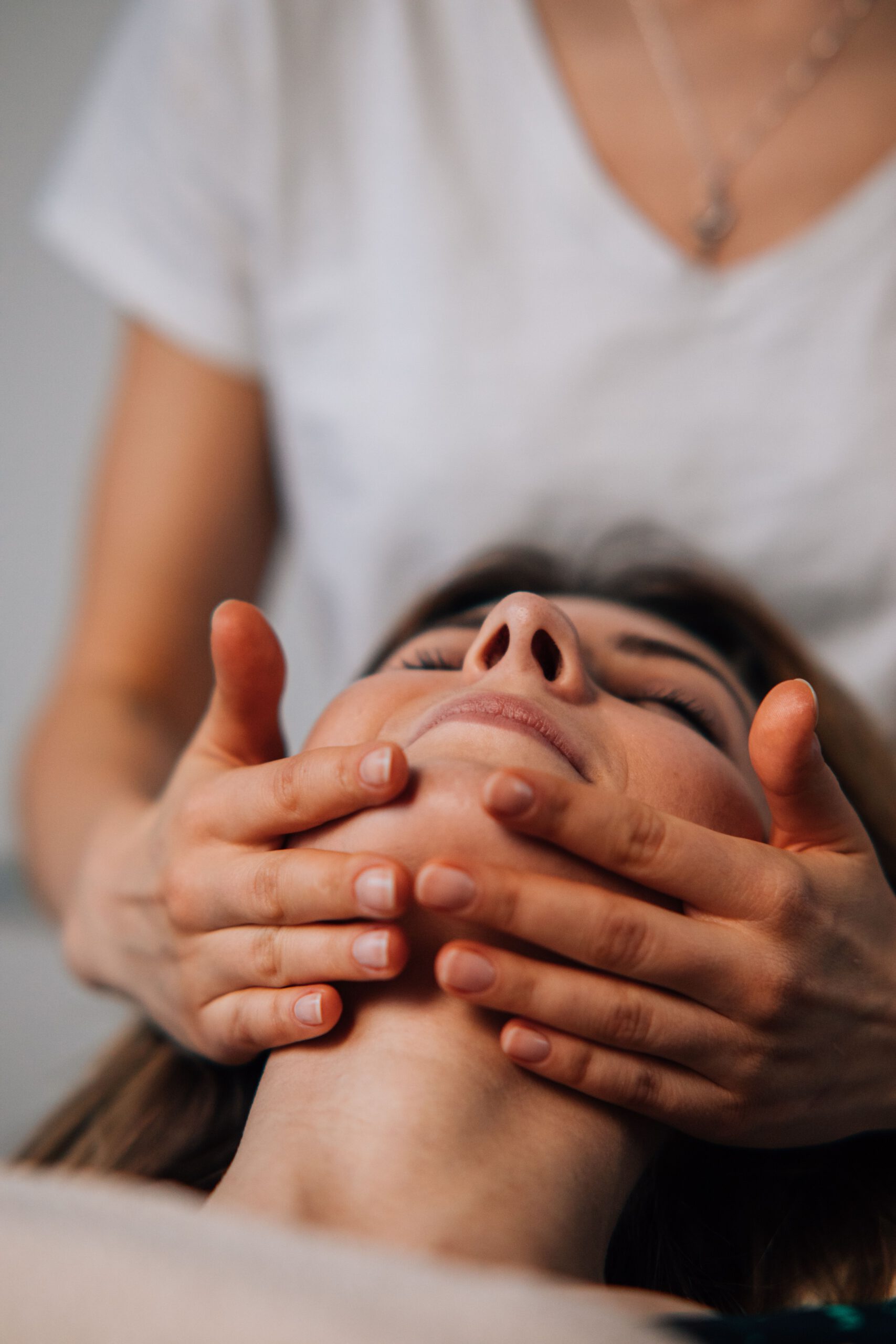
The first step is to find out what you’re dealing with. The problem may mainly involve the muscles, the joint itself, the teeth, the sinuses, the ear, the nervous system or several areas at once. Physiotherapy and manual therapy can be part of the plan, but they don’t replace a dental or medical diagnosis.
If muscular symptoms dominate and there are no contraindications, work on tension, range of motion and habits can often start before the braces go on. Not to „fix the bite by hand”, but to start treatment with a better awareness of your jaw’s resting position and less sensitive tissues.
Can you work on your jaw while wearing braces?
Yes, as long as the plan fits the stage of treatment and is coordinated with your orthodontist. Work on the facial muscles, temples, neck and the jaw’s movement path is not meant to replace orthodontic forces or move teeth.
Braces do, however, change the working conditions. Intraoral techniques have to take into account the brackets, wires, irritated gums and recent adjustments. When your teeth and tissues are clearly sore after an orthodontic visit, intensive work inside the mouth may not be a good idea. Safety and comfort matter more than sticking to the plan at any cost.
Why you can’t „massage it all out” in one visit
Online you’ll find stories about several „levels of tension” that have to be massaged out one by one. However, there is no widely recognised medical scale of muscle levels to work through. In practice, what’s assessed is mainly how sensitive the symptoms are, the range and path of movement, the reaction to touch, and whether the tissues calm down after the work or tighten even more.
If light pressure causes sharp pain, reflex clenching and feeling worse after the visit, stronger pressure is not proof that it’s working. It may just add more stimulation to a system that’s already overloaded.
That’s why the work is often done step by step:
- first, assessing symptoms, movement and warning signs,
- then reducing overall sensitivity and working with breathing, the neck and the temple area,
- next, gentle external work on the temporalis and masseter,
- intraoral techniques only when they’re needed, safe and accepted by the person being treated,
- finally, making the effect last through exercises and changes to daily habits.
For one person intraoral work will be possible from the start. For another it will come later or won’t be needed at all. That’s not a weakness of the body, it’s how the therapy is dosed.
How long does jaw tension therapy take?
It’s impossible to honestly set the number of sessions before an assessment. Fresh overload after a dental procedure behaves differently from years of clenching combined with headaches, sleep problems and limited mouth opening.
The first sessions focus on assessment and reducing symptoms. The following ones focus on regaining smooth movement, tolerance to load and your own control over tension. At first visits may be more frequent, then less so, once you can recognise clenching and react earlier.
Studies on exercise and manual therapy usually involve programmes lasting several weeks, but they don’t point to one ideal number of sessions for everyone. Good therapy has criteria for progress: less pain, freer movement, fewer episodes of clenching and more independence. It shouldn’t be based on selling everyone the same series upfront.
Massage brings relief. Exercises help you keep it
Research reviews suggest that therapeutic exercise and manual therapy can reduce pain and improve function in some people with TMD. The results are promising, but the programme should match the type of problem, because not all jaw pain is a muscle problem.
The exercises below are gentle, but they are not an individual treatment plan. If your jaw locks, the pain is getting worse, you’ve had a recent injury, a history of dislocation or a clear change in your bite, start with a consultation.
Jaw resting position
Rest the tip of your tongue lightly on the roof of your mouth just behind your upper teeth. Your lips can be closed, but your teeth stay apart. Breathe calmly through your nose for 30 to 60 seconds. Repeat several times a day, especially when working at the computer.
Controlled opening in front of a mirror
Slowly open and close your mouth within a pain-free range. Watch whether your chin drifts to one side. Do 5 to 8 calm repetitions. Don’t try to force a bigger range.
A quick habit check
A few times a day, ask yourself: „Are my teeth touching right now?”. If you’re not eating or swallowing, they usually don’t need to. Let them part, relax your tongue and drop your shoulders. This simple exercise teaches you to notice daytime clenching before it turns into pain.
Gentle side-to-side movements
Gently move your jaw to the right and to the left within a small, comfortable range. Do 4 to 6 repetitions on each side. The movement shouldn’t cause pain or increased clicking.
Resistance exercises only after assessment
Isometrics, meaning light resistance from your hand without visible jaw movement, can be useful, but it isn’t a starting exercise for everyone. With high sensitivity, locking or fresh pain it may make symptoms worse. We introduce it once it’s clear why it’s needed and what dose the person tolerates.
What not to do on your own
Don’t push your fingers deep into your mouth based on a video from the internet. Don’t force-stretch your jaw. Don’t press a painful spot until it brings tears to your eyes. The deep muscles and the area around the joint require knowledge of anatomy, hygiene and how tissues respond.
A splint, braces and massage don’t do the same thing
Orthodontic braces
Move teeth according to the treatment plan.
Splint
Fitted by a dentist, it can protect teeth and change how the system works, but evidence for its effectiveness in TMD pain alone is limited.
Manual therapy
Works on the soft tissues and movement.
Exercise and self-regulation
Help change function and habits.
These elements can complement each other, but none of them should pretend to be all the others. If someone promises that one massage will „realign the joint”, that braces will cure bruxism or that a splint alone will solve every headache, it’s worth being cautious.
When massage isn’t the first step
See a doctor, dentist or orthodontist first if:
- your jaw has locked open or closed,
- you can’t open or close your mouth freely,
- the pain is severe, keeps getting worse or wakes you up at night,
- you have facial swelling, fever, redness or discharge from the ear,
- the symptoms started after an injury to the face or jaw,
- you have facial numbness, sudden asymmetry or neurological symptoms,
- during orthodontic treatment the way your teeth meet has suddenly changed or part of your braces has come loose.
Manual therapy can be a later part of treatment, but it doesn’t replace a diagnosis.
You don’t need a stronger massage. You need the right plan
„I had no idea that was even a muscle”
The sentence we hear most often after showing someone their masseter.
It’s hard to change a habit you don’t notice. That’s why good jaw work doesn’t start with strong pressure. It starts with questions: when do you clench, what triggers the symptoms, how does your jaw move and what does your system need right now.
If you’d like to find out whether your temple pain, tight neck or morning stiffness could be linked to overloaded chewing muscles, book a consultation and see the treatments offered at UfMed.
About the author
Patrycja
Patrycja is a massage therapist at UfMed. She has completed training in temporomandibular joint physiotherapy and provides jaw and face mobilisation massage.
Meet Patrycja and book a consultation at UfMed.
UfMed, Dobra 8/10, unit 37, Warsaw, Powiśle
Read also
Frequently asked questions
Can I come for a jaw massage while wearing braces?
Usually yes, taking into account the stage of treatment, the condition of your gums and your orthodontist’s advice. Any new changes in your bite or increased pain should first be reported to the person in charge of your treatment.
Does intraoral (transbuccal) massage have to hurt?
No. Work inside the mouth can feel intense, but it shouldn’t be about enduring pain. Too strong a stimulus often increases protective tension.
Can massage cure bruxism?
Not on its own. It can reduce muscle tension and discomfort, but night-time bruxism has complex causes. It needs a dental assessment and sometimes cooperation with a doctor, physiotherapist or psychologist.
Is it too late once the braces are off?
No. If your teeth are properly aligned but the clenching habit and muscle overload remain, you can still work on function, movement and awareness of tension. First, though, it needs to be checked whether the symptoms really are muscular.
Sources and further reading:
- NIDCR: Temporomandibular Disorders (TMD)
- Orthodontics and temporomandibular disorders: an evidence-based review
- Effectiveness of exercise therapy on pain and mouth opening in patients with temporomandibular disorders
- Effectiveness of Manual Therapy and Therapeutic Exercise for Temporomandibular Disorders
This article is for information only and does not replace medical or dental advice or an individual diagnosis.
Feel the „phew” effect. Get yourself back.